How Long Do Coffee Beans Last?
By Hugo Coffee · Edited by Bryce Choquer · · 5 min read
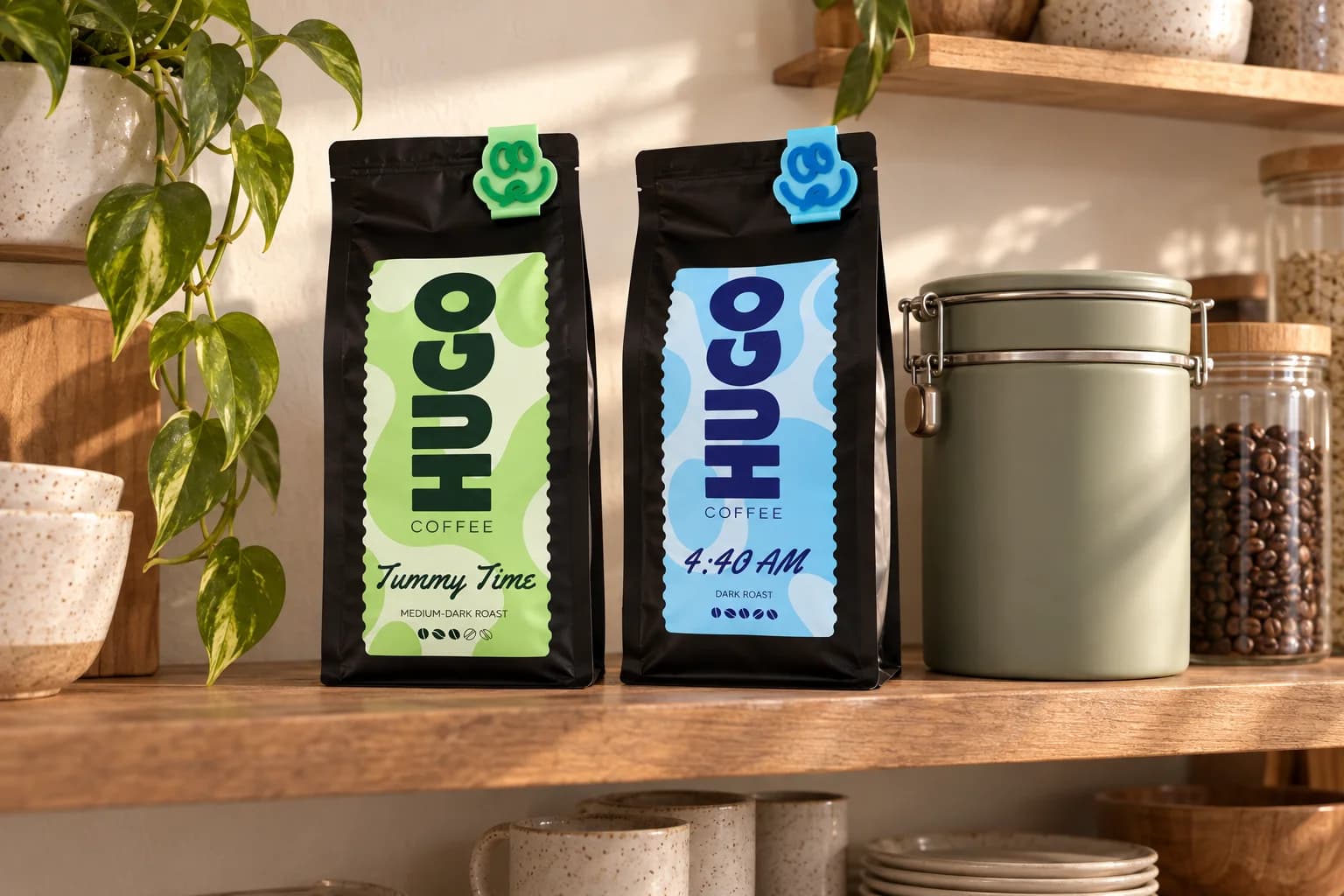
Coffee beans gradually lose flavour; there is no single freshness deadline for every bag. As a general reference, the National Coffee Association's freshness guide lists one to three weeks for roasted beans at room temperature after opening and transfer to an airtight container. That is a quality guideline under stated storage conditions, not a Hugo shelf-life guarantee or a date when coffee suddenly becomes unsafe.
Current Hugo bags do not have a printed roast date or best-before date. We do not turn a general freshness guideline into an invented date for your bag. Once you open it, note the opening date and pay attention to how your everyday cup changes. Hugo can make a morning feel very long. Your coffee calendar can stay simple.
Three dates that answer different questions
Roast date: when the beans were roasted. If a bag supplies one, it gives you a reference point for comparing batches. It does not, on its own, establish a safety deadline or tell you the best brewing day for every coffee.
Best-before date: a quality reference for a properly stored, unopened product. The Canadian Food Inspection Agency explains that best-before dates concern qualities such as freshness and taste, apply to unopened food, and do not indicate food safety either before or after that date. Opening the package changes the situation.
Opening date: your own note of when you started the bag. Write it on the bag or a removable container label. It helps you compare cups and remember which bag to use first; it is not a replacement for the information on the package.
Read the words beside a printed date before deciding what it means. A code without an explanation is not enough to identify a roast date. If you cannot interpret the marking on your Hugo bag, ask us about it rather than guessing.
Freshness and safety are different questions
A less aromatic bag or a flatter cup can be a quality disappointment. Those observations cannot establish that food is safe. The CFIA's consumer guidance asks you to consider spoilage, storage history, time since opening and the type of food; some hazards do not announce themselves through smell or appearance.
If beans show mould, have become wet, or you suspect contamination, do not taste-test them to settle the question. Set them aside and contact the seller about the problem. A best-before date does not override questionable handling or storage.
What changes after you open the bag
The NCA recommends protecting beans from air, moisture, heat and light, and grinding the amount you need just before brewing. An unopened package and a bag opened every morning do not offer the same conditions. Do not apply an unopened best-before date as a promise about the flavour of an already opened bag.
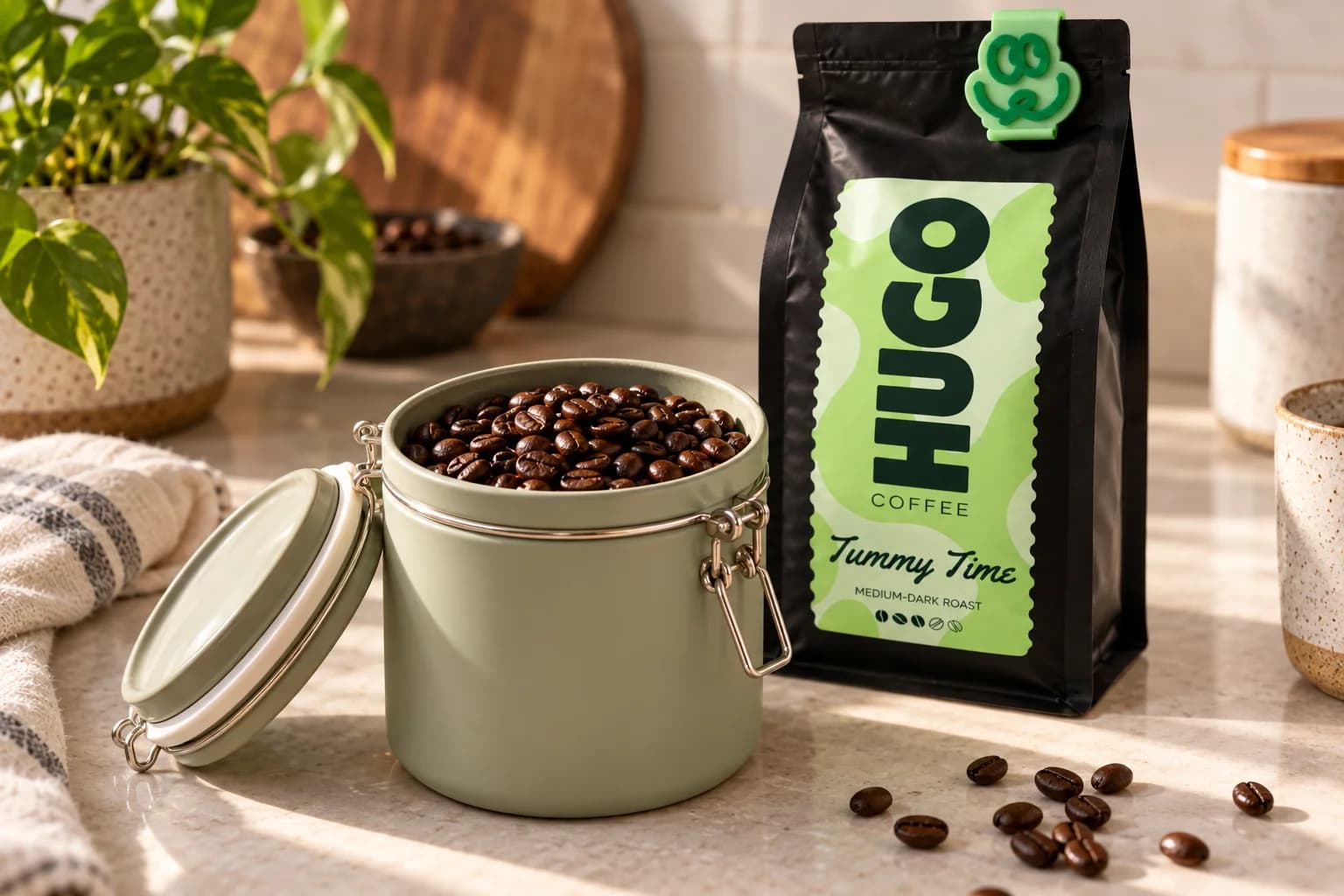
After opening, move your everyday beans into a suitable airtight container and keep them cool, dry and away from light. This routine does not depend on the bag having a particular closure or valve. For the cupboard, container and cold-storage details, use our coffee storage guide. This guide focuses on dates and buying quantities so you can keep one manageable routine.
Work out how long your bag will last you
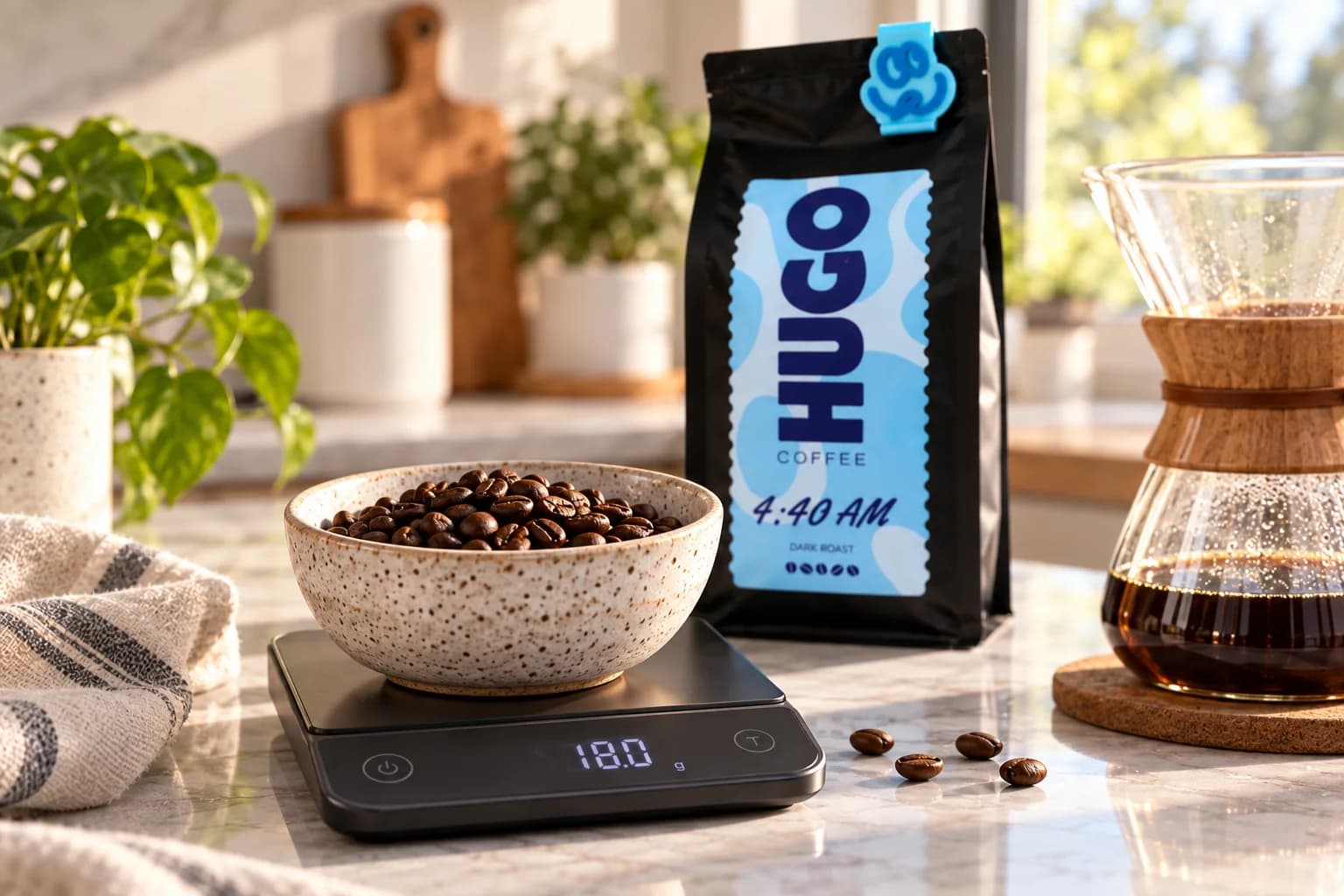
Hugo's Tummy Time and 4:40 AM are sold as 340 g bags of whole beans. Divide 340 by the grams you use each day to estimate how many days a bag covers. That calculation describes your supply, not the beans' shelf life.
At one 14 g brew per day, a bag contains about 24 full doses. At one 28 g brew per day, it contains about 12. Two people each using 14 g a day also use about 28 g daily. Allow for any coffee used while adjusting your grinder. Our filter coffee ratio guide explains that starting dose and how to scale it.
If several bags tend to sit unopened while you work through the first, order fewer at once. If you finish your coffee quickly, use your actual dose and brewing frequency to plan the next order. Before choosing a coffee subscription, check the available schedule against that calculation.
Keep a small note, then trust the routine
Record the opening date, your usual dose and roughly when you finish the bag. For coffee with no reason to suspect a safety problem, comparing cups made with the same recipe can help you learn what freshness means to your own taste. Changing the grind, dose and coffee all at once makes the comparison harder.
Choose a bag you can work through comfortably, keep the label information, and give it sensible storage. Find your next Hugo roast, one good morning at a time.
Share a good morning