How Many Coffee Bags Do You Need?
By Hugo Coffee · Edited by Bryce Choquer · · 6 min read
How long will your bag last?
Your household. Your brew. A plan for the next good morning.
340gof good
Know your recipe? Advanced options
Using an approximate 15 g of beans for your selected cup size. These are brewed-coffee estimates, not a measured average. For espresso or another recipe, use Advanced options.
For 14 days
3 whole bags
About 2.47 bags’ worth of coffee
- One-time
- $75 CAD
- Subscription price
- $67.50 CAD
For 30 days
6 whole bags
About 5.29 bags’ worth of coffee
- One-time
- $150 CAD
- Subscription price
- $135 CAD
How we work it out
Daily use = drinkers × cups per person × grams per cup. Bag life = 340 ÷ daily grams. Whole bags round up after calculating the full period; displayed decimals are rounded. We assume no beans on hand and no waste. Carry leftover beans into your next period.
Current 340g whole-bean prices: $25 CAD one-time or $22.50 CAD per subscription bag. Estimates use whole bags and exclude shipping and any applicable tax. Subscriptions deliver every two weeks or monthly, with 14 days’ notice to pause or cancel. A 30-day estimate is a planning window; calendar months vary. These figures are a price comparison, not a subscription quote or delivery recommendation.
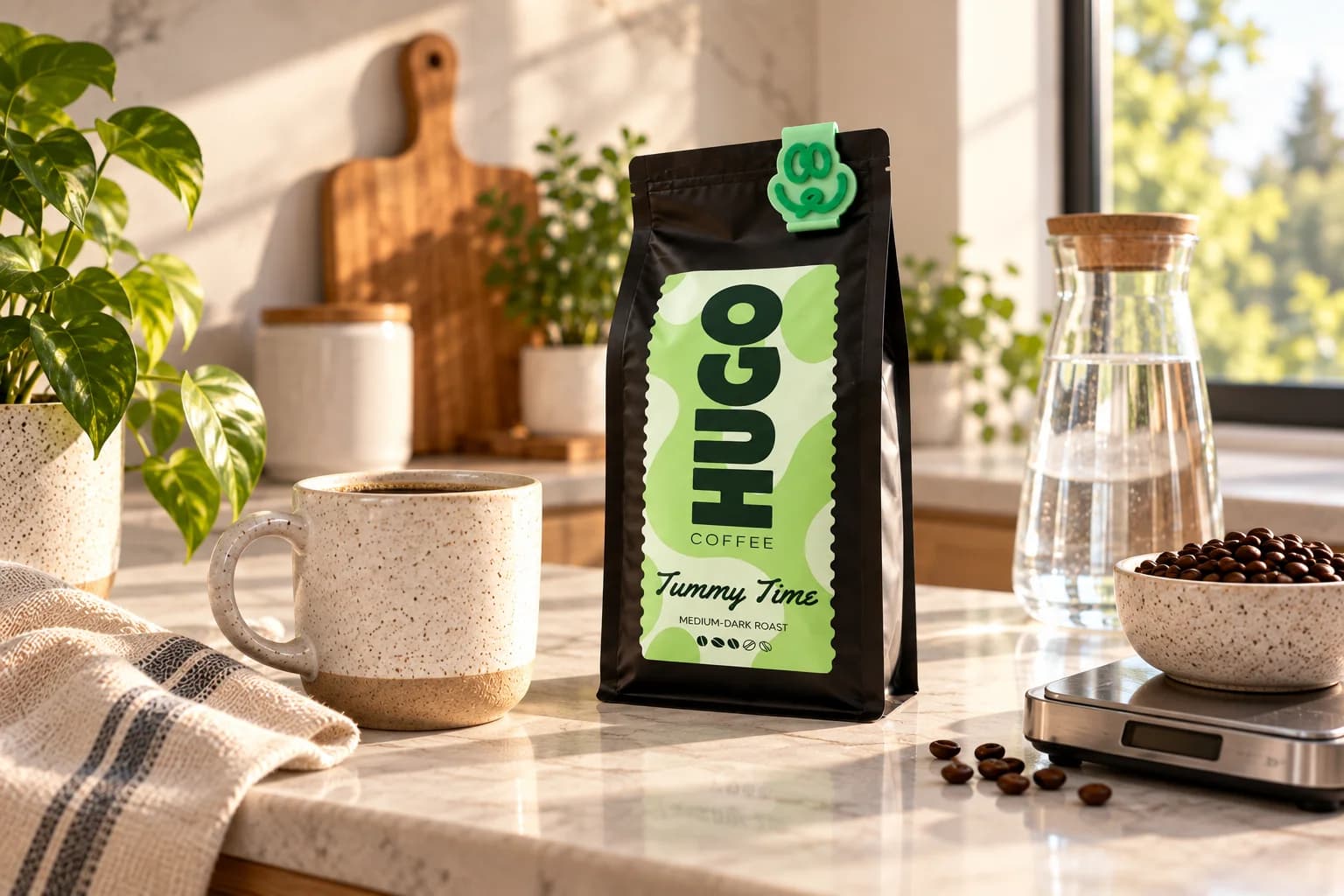
A 340 g bag makes 17 brews at 20 g of coffee per brew. To work out your household's order, multiply the coffee you use each day by the number of days you want to cover, then divide by 340. Your dose and the number of drinks you make at home matter more than a generic promise of “cups per bag.”
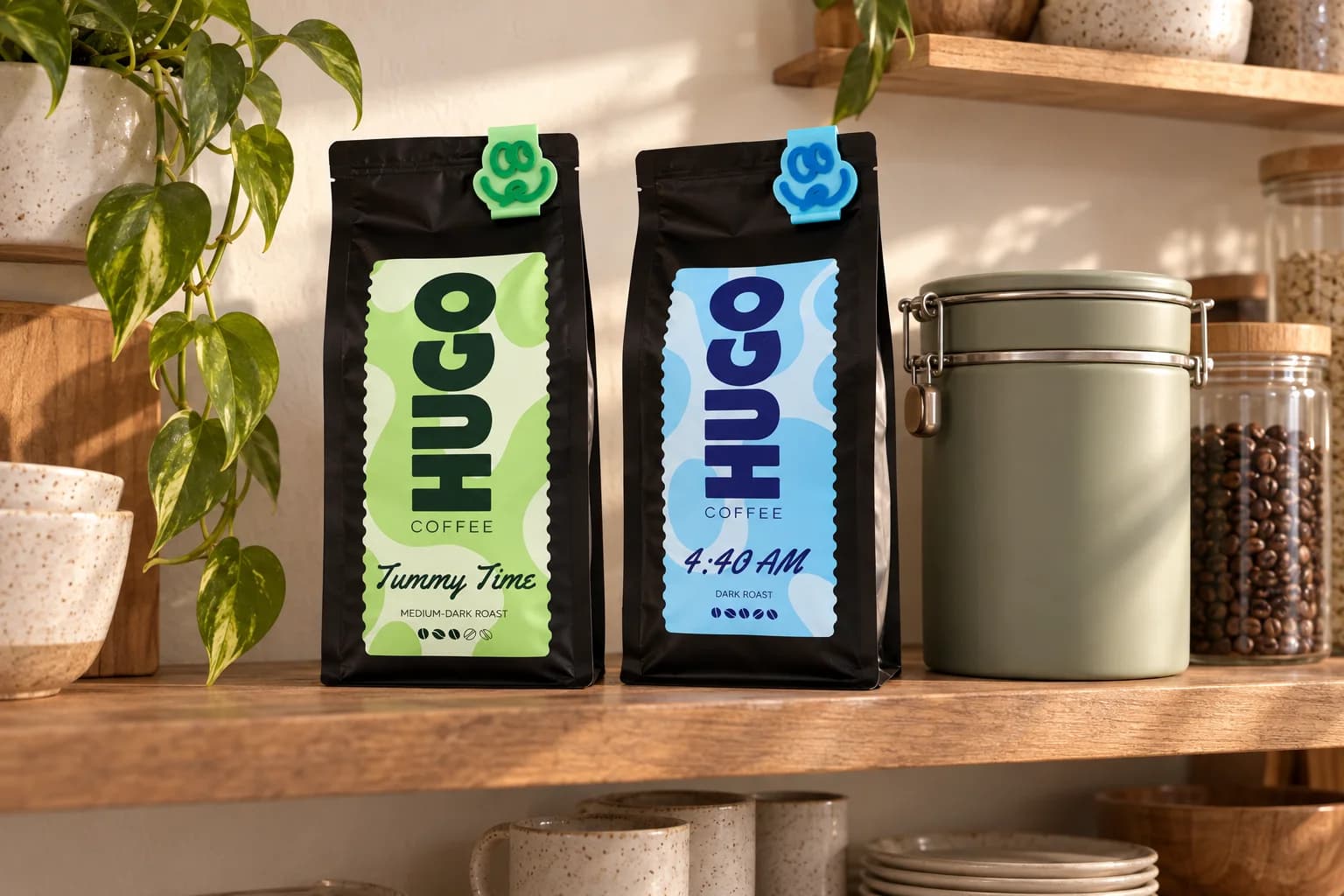
Hugo's Tummy Time and 4:40 AM both come as 340 g bags of whole beans. This guide helps you plan a supply around the coffee you already make. Hugo may have other plans for your morning; at least the cupboard can be ready.
Start with the coffee in your usual cup
A dose is the weight of dry coffee you put into the brewer. Weigh your beans before grinding, or weigh the grounds that go into the brewer if your grinder holds some back. Record the amount for your usual recipe rather than relying on a scoop.
Our filter coffee ratio guide starts with 14 g of coffee for 250 mL of brewing water. Scaling that recipe to 350 mL gives 19.6 g, rounded to 20 g. The water amount goes into the brewer; some stays in the grounds, so it is not a promise of the finished drink volume.
The calculator's Small preset uses 15 g as a simple buying estimate; Regular uses 20 g and Large uses 28 g. These approximate cup sizes are starting points, not fixed recipes. To plan with the ratio guide's 14 g dose or another weighed recipe, open Advanced options and select “Use my own coffee amount.”
A coffee maker's “cup,” a small cup and a travel mug can mean different amounts. Measure your own recipe. The National Coffee Association's drip guide also treats brewing method and grind as parts of the recipe. Our filter starting point is something to adjust to your equipment and taste.
How many brews does a 340 g bag make?
At 14 g per brew: 340 ÷ 14 = about 24.3 doses. That is 24 full brews, with 4 g left.
At 20 g per brew: 340 ÷ 20 = exactly 17 full brews.
At 28 g per brew: 340 ÷ 28 = about 12.1 doses. That is 12 full brews, with 4 g left.
These examples assume the full bag is available for brewing. Coffee used to adjust a grinder, spills and grounds retained in equipment can reduce the number you actually make. Leftover beans can contribute to the next dose; they are not automatically waste.
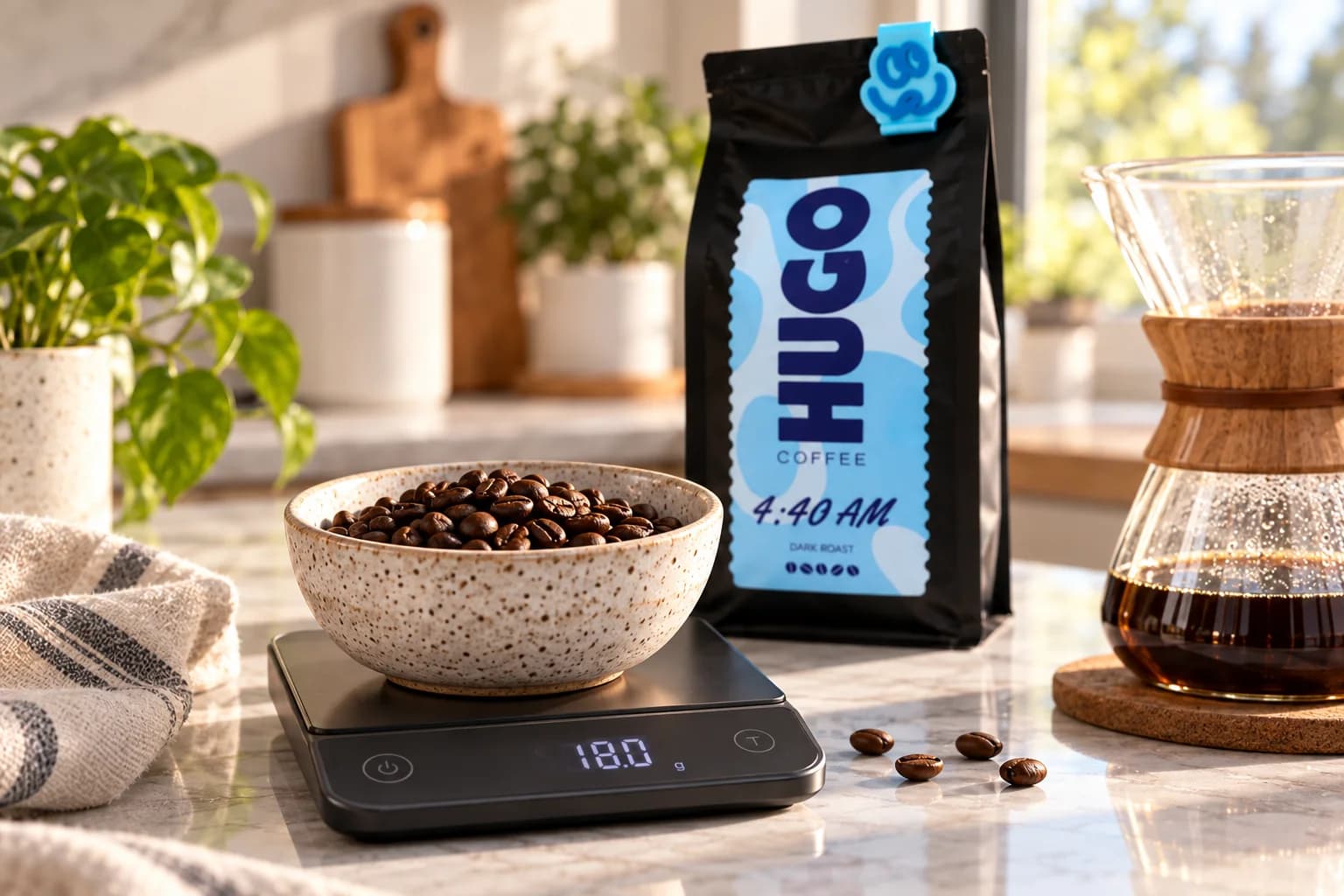
Count the drinks your household makes at home
Start with household coffee drinkers × cups per person per day. Count drinks made from your home supply, rather than including coffee bought elsewhere. If two people each make one coffee at home every day, that is two daily cups. At 20 g each, the household uses 40 g a day.
That shortcut assumes everyone uses the same dose. If one person uses 14 g and another uses 20 g, add those amounts instead: one of each is 34 g a day. If you brew a shared pot, count the total dry coffee used in the pot once. A 40 g batch divided between two mugs uses 40 g, not 40 g for each mug.
Track a normal week if weekdays and weekends differ. Add the grams used across the week and divide by seven for a daily average. Include guests or extra brews when you expect them. These are buying examples based on an existing routine, not recommendations about how much coffee anyone should drink.
Turn daily use into bags for your next order
Bags needed = daily coffee in grams × days to cover ÷ 340. Subtract the usable beans you already have from the total grams before dividing. If you need to cover the whole period from a new order, round the final answer up to a whole bag.
One person, one 14 g brew a day, 30 days: 14 × 30 = 420 g. With no beans on hand, 420 ÷ 340 = about 1.24 bags, so buy two. Two bags contain 680 g, leaving 260 g after the planned 420 g. Carry that balance into the next order calculation.
Two people, one 20 g brew each a day, 30 days: 2 × 1 × 20 × 30 = 1,200 g. That is about 3.53 bags, so four bags cover this example from an empty cupboard. Four bags contain 1,360 g, leaving 160 g after the planned brews.
The same household, 14 days: 40 × 14 = 560 g. That is about 1.65 bags, so two bags cover the period from an empty cupboard, with 120 g left. One 340 g bag alone lasts 8.5 days at that household's 40 g daily use.
The monthly examples use 30 days for planning. A calendar month can have 28, 29, 30 or 31 days; use the actual gap between orders when you know it. Delivery time also matters: plan for when beans will reach your cupboard, not just the date you place an order.
Does the coffee type change the calculation?
Your coffee choice and brew method may lead you to use a different dose or grind. Espresso, filter coffee and cold-brew concentrate should use their own recipes. The NCA's espresso guide describes espresso by its brewing method and gives a ratio of dry coffee to finished espresso; that is a different measurement from filter brewing water.
For a latte or Americano, count the dry beans used for its espresso. Adding milk or water makes a larger drink without using more beans. For concentrate, count the beans in the batch and how many servings you actually make from it.
Tummy Time is medium-dark and 4:40 AM is dark, but both bags contain 340 g. A darker roast does not turn a 340 g bag into a different bag weight. If you change your recipe when switching coffee, put the new dose into the calculation. Counting scoops instead of grams can hide that change.
Choose one-time bags or a delivery rhythm
As of October 28, 2026, Hugo's 340 g whole-bean bags are $25 CAD each for a one-time purchase or $22.50 CAD each on subscription. Shop one-time bags, or compare coffee subscriptions delivered every two weeks or monthly. Every two weeks means a 14-day interval, not twice in every calendar month. Check the current price and order total before paying.
In the two-person, 20 g example, four bags cost $100 CAD one-time or $90 CAD at the subscription bag price. Two bags cost $50 CAD or $45 CAD respectively. These are coffee-only subtotals, not a statement of the final checkout total.
Use the rounded-up quantity as a starting order, then watch your remaining beans. Reordering four bags every month regardless of leftovers can build a surplus. Hugo asks for 14 days' notice for subscription changes, pauses or cancellations before the next scheduled order. If cancellation is inside that window, the next order is still charged and shipped before the subscription stops. Read the subscription terms before choosing your schedule.
Keep a manageable supply
The NCA's storage guidance recommends smaller, more frequent purchases and airtight storage away from moisture, heat and light. Keep the beans whole until you need them, and follow our coffee storage guide for a practical cupboard routine. A calculated number of days in stock is not a guarantee of flavour or shelf life.
Note when you open a bag, how much you use and when you finish it. After a cycle or two, adjust the quantity to your real household use. Choose your Hugo roast and let the next order follow the routine you actually have.
Bryce Choquer is the credited editor. Read how we prepare these guides, including AI drafting assistance and the limits of illustrative brand images. The examples here are calculations, not claims of personal brewing tests.
Share a good morning